In the field of industrial assembly, especially in sheet metal processing and equipment manufacturing scenarios, through-hole sheet metal rivet nut studs have long been indispensable core fastening accessories. As a key component integrating riveting and nut functions, they have successfully solved the industry pain point of reliable connection for thin-walled sheet metal parts with the prominent advantages of convenience, stability and versatility. Their unique structural design and excellent performance have enabled them to be widely used in many high-end fields such as aerospace, automobile manufacturing, and electronic and electrical equipment, serving as an important link to ensure the quality and efficiency of assembly operations.
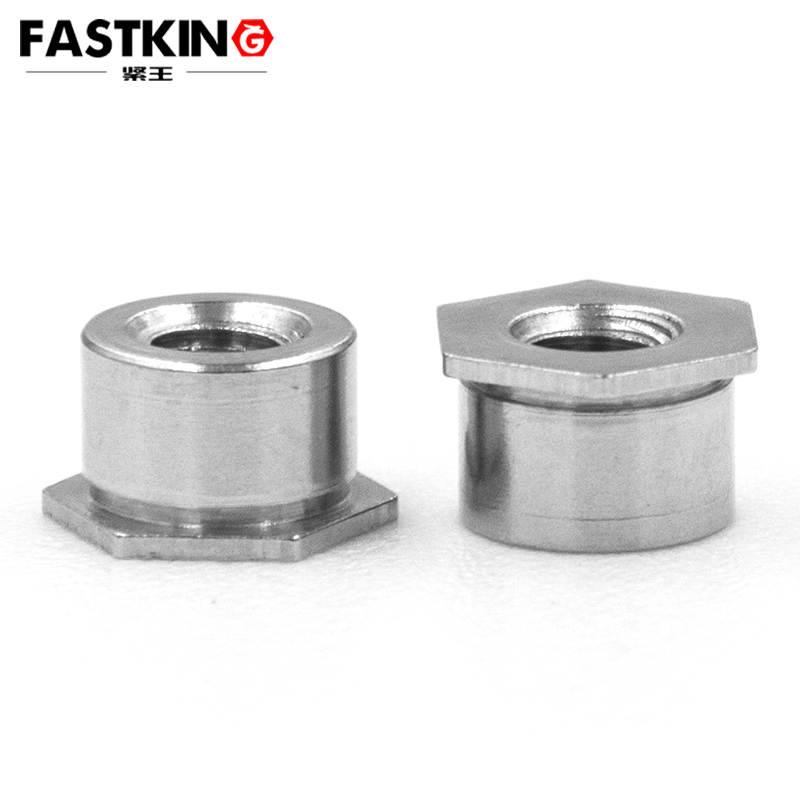
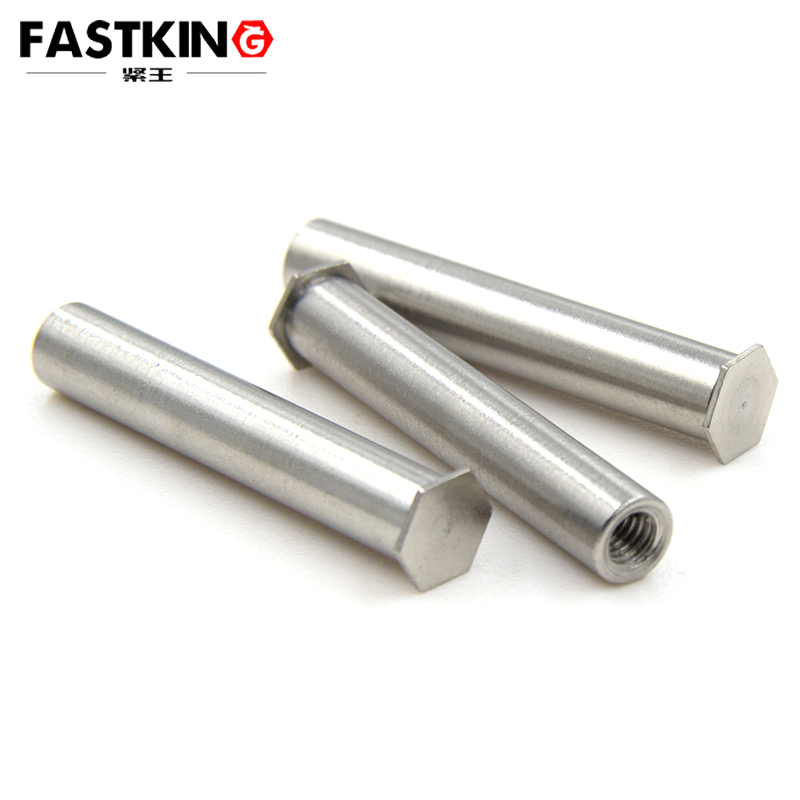
The core structure of through-hole sheet metal rivet nut studs consists of two parts: a cylindrical stud and a riveting end. The through-hole design running through the entire body is a key feature that distinguishes them from other nut studs. This design not only facilitates the smooth penetration of bolts or screws to ensure the continuity of the connection channel but also effectively avoids problems such as positioning deviation and misalignment that are prone to occur in blind hole structures, greatly improving assembly accuracy. The riveting end usually adopts a special toothed or flange structure. During installation, there is no need for welding or tapping on the sheet metal part; only appropriate pressure needs to be applied with a special riveting tool to firmly embed the riveting end into the prefabricated hole of the sheet metal, forming a stable connection structure. This welding-free and tapping-free installation method not only simplifies the assembly process and shortens the construction cycle but also avoids damage to the sheet metal surface and destruction to the internal structure of thin-walled sheet metal parts during processing, making it particularly suitable for processing scenarios of easily deformable thin-walled sheet metal.
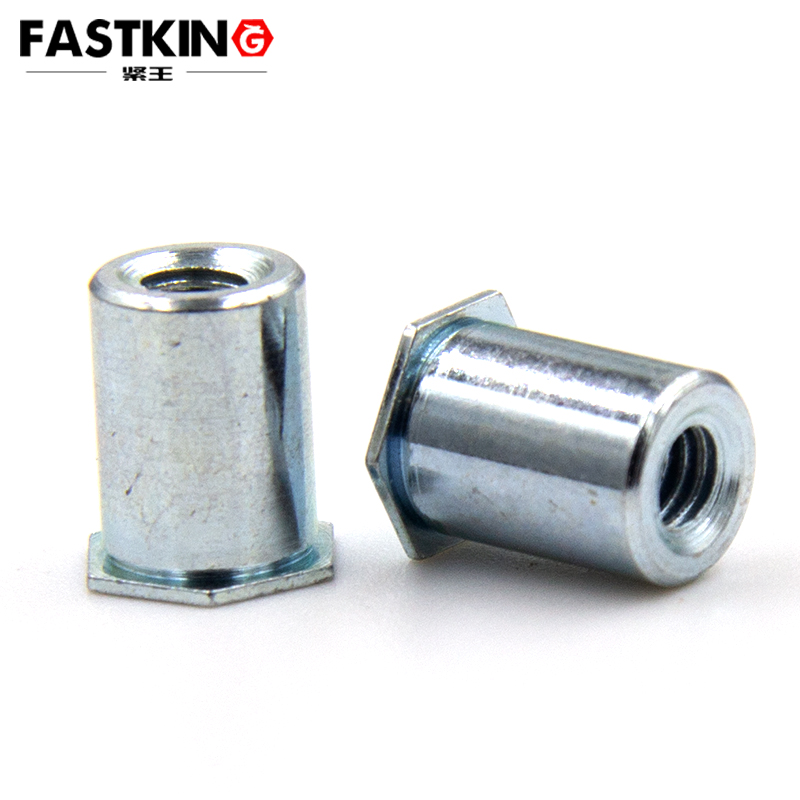
One of the significant advantages of through-hole sheet metal rivet nut studs is their strong adaptability to sheet metal materials. Whether it is common sheet metal materials such as stainless steel, aluminum alloy, and galvanized sheet, or sheet metal parts of different thickness specifications, corresponding suitable models can be found. Manufacturers usually accurately design the structural size and tooth profile specifications of the riveting end according to parameters such as the thickness and material hardness of the sheet metal to ensure that an appropriate riveting force is generated after riveting, which not only guarantees the firmness of the connection but also prevents deformation of the sheet metal part due to excessive pressure. In addition, to improve the service life in complex environments, the surface of rivet nut studs is usually subjected to anti-rust treatments such as galvanizing and nickel plating. These treatment processes can form a dense protective film on their surface, effectively resisting the erosion of moisture and oxygen in the air, and at the same time can withstand the impact of some slightly corrosive media, enabling them to maintain stable performance in humid and dusty industrial environments.
In practical application scenarios, the value of through-hole sheet metal rivet nut studs has been fully demonstrated. In the field of automobile manufacturing, they are widely used in the assembly of body sheet metal, instrument panels, car doors and other components. Faced with complex working conditions such as vibration and impact during automobile operation, their stable connection performance can effectively avoid component loosening and ensure driving safety. In the electronic and electrical industry, the sheet metal connection of various precision instruments and equipment casings mostly relies on this accessory. Its compact structural design does not occupy too much space, and the through-hole can meet the needs of circuit layout and component interpenetration, adapting to the assembly requirements of precision electronic equipment. In the aerospace field, there are extremely high requirements for the lightweight and high precision of accessories. Through-hole sheet metal rivet nut studs have become an important choice for aircraft sheet metal structure assembly due to their lightweight materials and precise connection performance, providing guarantee for the safe operation of aerospace equipment. In addition, in fields such as medical devices and communication equipment, they have also become core fastening accessories with reliable performance.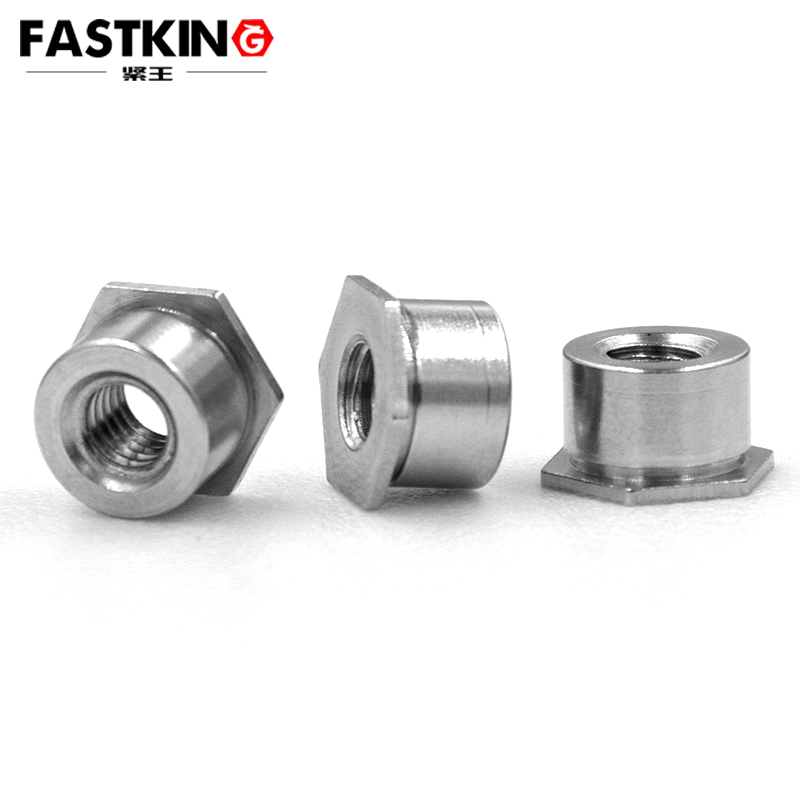
It should be noted that the use effect of through-hole sheet metal rivet nut studs is closely related to correct selection, installation and maintenance. In the selection stage, it is necessary to select products of matching specifications in combination with parameters such as the material, thickness and prefabricated hole size of the sheet metal to avoid insecure riveting or sheet metal deformation caused by inconsistent specifications. During installation, it is necessary to ensure that the pressure of the riveting tool is uniform and stable, and the riveting position is accurately aligned with the prefabricated hole of the sheet metal to prevent problems such as riveting deviation and tooth profile damage. In the daily maintenance process, the connection state of the rivet nut studs should be regularly inspected to check for rust, loosening and other conditions on the surface. For accessories in corrosive environments, additional protective measures should be taken in a timely manner or aging components should be replaced regularly to ensure the stability of the overall assembly structure.
With the continuous upgrading of industrial manufacturing technology, the performance of through-hole sheet metal rivet nut studs is also constantly optimized. By improving production processes and optimizing material selection, manufacturers have further enhanced their load-bearing capacity, rust resistance and adaptability range. From traditional industrial assembly to high-end precision manufacturing, through-hole sheet metal rivet nut studs have continuously adapted to more diverse application scenarios with their unique advantages. Although seemingly small, they are actually basic accessories that support the stable operation of many industrial products. With precise connection and reliable performance, they provide solid guarantee for the high-quality development of industrial manufacturing.